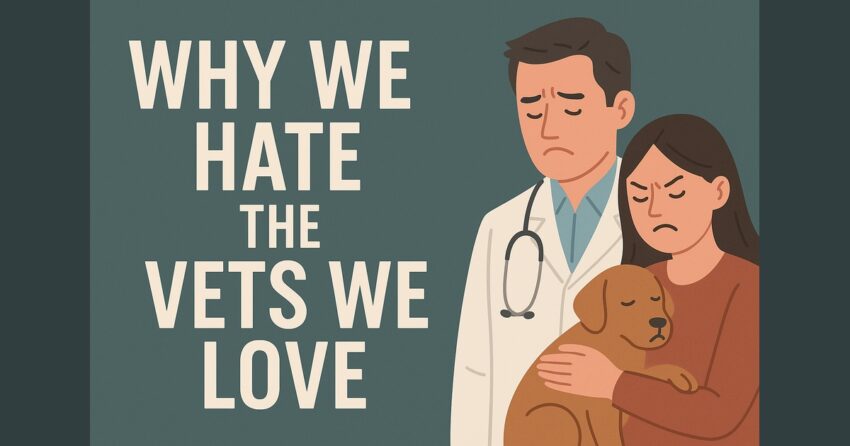
Why we have the vets we love. It’s a contradiction that only animal lovers, rescuers, and caretakers truly understand — the deep love we feel for our veterinarians, and the equally deep frustration, anger, even hatred that can surface in moments of helplessness and loss.
We place our beloved animals in their hands — animals who don’t speak, who often suffer in silence, who rely on us to be their voices. And in those fragile, desperate moments, the vet becomes something more than a professional. They become our last hope. They become, in many ways, Gods.
And that is where it all begins — and sometimes, where it all begins to unravel.

The Pedestal Problem
When a vet pulls an animal back from the brink — stabilizes a broken limb, heals a festering wound, cures a deadly illness — our gratitude is overwhelming. In our eyes, they have performed a miracle.
And so we do what humans have always done in the presence of miracles: we elevate the miracle worker. We treat our vets like Gods. We speak of them in reverent tones. We hang onto their every word.
But in doing this, we make our first mistake. We forget they are human.
Vets are fallible. They are trained, yes. Skilled, yes. Compassionate, absolutely. But they are still human. They delve in a inexact science. They can miss something. They can make a wrong judgment. They can get tired. And when the outcome is not what we expected or hoped, the fall from grace is hard — not just for us, but for them too.
The Inexact Science
Medicine is not magic. It is a practice — a complicated, evolving dance of knowledge, experience, instinct, and, sometimes, luck. Even the best vet cannot guarantee a cure. Even the most diligent one cannot always prevent death.
But when our animal is in pain — or worse, when they die — we look for someone to blame. And who do we see standing there, closest to the suffering? The vet.
Not the disease. Not fate. Not bad timing. The vet.
We lash out. We cry, “He should have done this,” or “She didn’t try hard enough,” or “They gave up too soon.” Our grief takes the shape of anger. And the target, many a time unfairly but inevitably, becomes the person we once adored.
This emotional whiplash is not rational. But it is real.
The “Anytime” Trap
A phrase we often hear from our vets is, “Call me anytime.”

It’s said with kindness, with good intent — often in the middle of an emotional consult. And we take it to heart. Because our animal is family. And when something goes wrong, of course we’ll call. And call again.
But sometimes the vet doesn’t pick up. Or replies late. Or doesn’t reply at all. And that hurts. Because we’re scared. Because we don’t know what to do. Because we feel alone.
But the truth is — the vet might be in surgery. Or asleep. Or attending to another emergency. They have families too. Bodies that tire. Minds that burn out.
This doesn’t lessen our panic. But it does offer perspective: they’re not ignoring us. They’re surviving too, one patient at a time.
The Fallibility of Reverence
Sometimes being idolized affects the person being idolized. Vets, who are constantly treated like miracle workers, can develop a certain detachment, even arrogance. It’s not always intentional — often, it’s a coping mechanism. When you live in a world of trauma and loss, some distance is necessary for self-preservation.
But when this detachment turns into dismissiveness, it can hurt.
Caretakers, especially those who work closely with animals, often have deep insights into their companions. They can spot changes in behavior long before clinical symptoms emerge. They can sense pain in the tilt of a head or the way an animal eats.
When vets ignore or downplay these observations, it creates resentment. Yes, vets are the experts in medicine. But we are the experts in our animals. We would want them to listen to us as well.
Does Preferential Treatment exist?
There is a sinking thought (very often misplaced) that those with more money, more influence, or more “glamorous” pets seem to get quicker attention, better access, or gentler handling. Angst and more angst.
In the fog of emotion, it’s easy to mistake timing and delay for bias. The truth is: triage is hard. Vets are stretched thin. Emergencies collide. Priorities must be made. Most vets, we believe — and want to keep believing — do not see breed or bank balance when they see a patient. They do see a life that needs help.
The Weight of Unpaid Promises

There’s also a quieter tension that rarely gets spoken about — money. Many of us, especially those involved in rescue or community care, have found ourselves in situations where we couldn’t pay a vet’s bill on time. And more often than not, vets have been kind — offering credit, giving discounts, or waiving fees altogether out of compassion. But they, too, have clinics to run, salaries to pay, and families to support.
Unfortunately, not everyone honors the trust placed in them. Some never return to settle dues. Some demand free treatment. Others walk away with vague promises to “send the money later.” Over time, these broken promises leave a bad taste — and a trail of mistrust. Vets begin to guard themselves. They may hesitate. They may avoid. And we, on the receiving end, are left wondering why the warmth has faded — why the doors that once opened freely now feel a little heavier. The result? More angst. More misunderstanding. And another crack in an already delicate relationship.
The High Stakes of Care
Veterinary care is not just about science — it’s about emotion. It’s about navigating the murky waters of fear, hope, and grief, often all at once. It’s about life and death.
For both vets and caretakers, this is the environment we inhabit. It is emotionally charged. It is high-stakes. There is no room for ego here. No space for blame games. Only the shared goal of trying — truly trying — to help those who cannot help themselves.
When things go wrong, we’re not just upset. We’re heartbroken. And we want someone to fix it.
Sometimes we want it to be the vet. Sometimes we expect it. And when they can’t, we hate them for it.
But that hate is not hate. It’s pain, misplaced. It’s grief, looking for a landing. It’s love, turned inside out.
A Letter to Our Vets
To the vets reading this — this is from the heart, it’s a confession with no intention to offend but an attempt to explain our seemingly (hopefully only occasionally) our bizarre and unhinged behaviour.
We know you care. We see the exhaustion in your eyes. We hear it in your voice when you say, “I did all I could.”

We know you lose sleep over the ones you couldn’t save. That sometimes, you cry after we’ve gone.
But we ask you — please don’t forget we’re human too. That we’re not just clients. We’re not just “owners.” We are families. And when we break down, it’s not because we don’t trust you. It’s because we do — so deeply that we placed a life in your hands.
Please don’t misunderstand us when we offer our observations. Please don’t take our calls as entitlement — take them as cries for help. Please don’t get hardened by the pedestal we wrongly placed you on.
In Closing
We may appear to hate the vets we love in our worst moments. But that love — the love that made us trust you with our animals — never truly leaves. It just wears the mask of grief.
Love you all for what you do and thank you.

Zarir M. Karbhari is the founder of the Kunashni Foundation which is dedicated to improving the lives of community animals living on the streets of Pune, promoting responsible ownership and raising awareness about animal welfare. Click here to know more about the foundation.